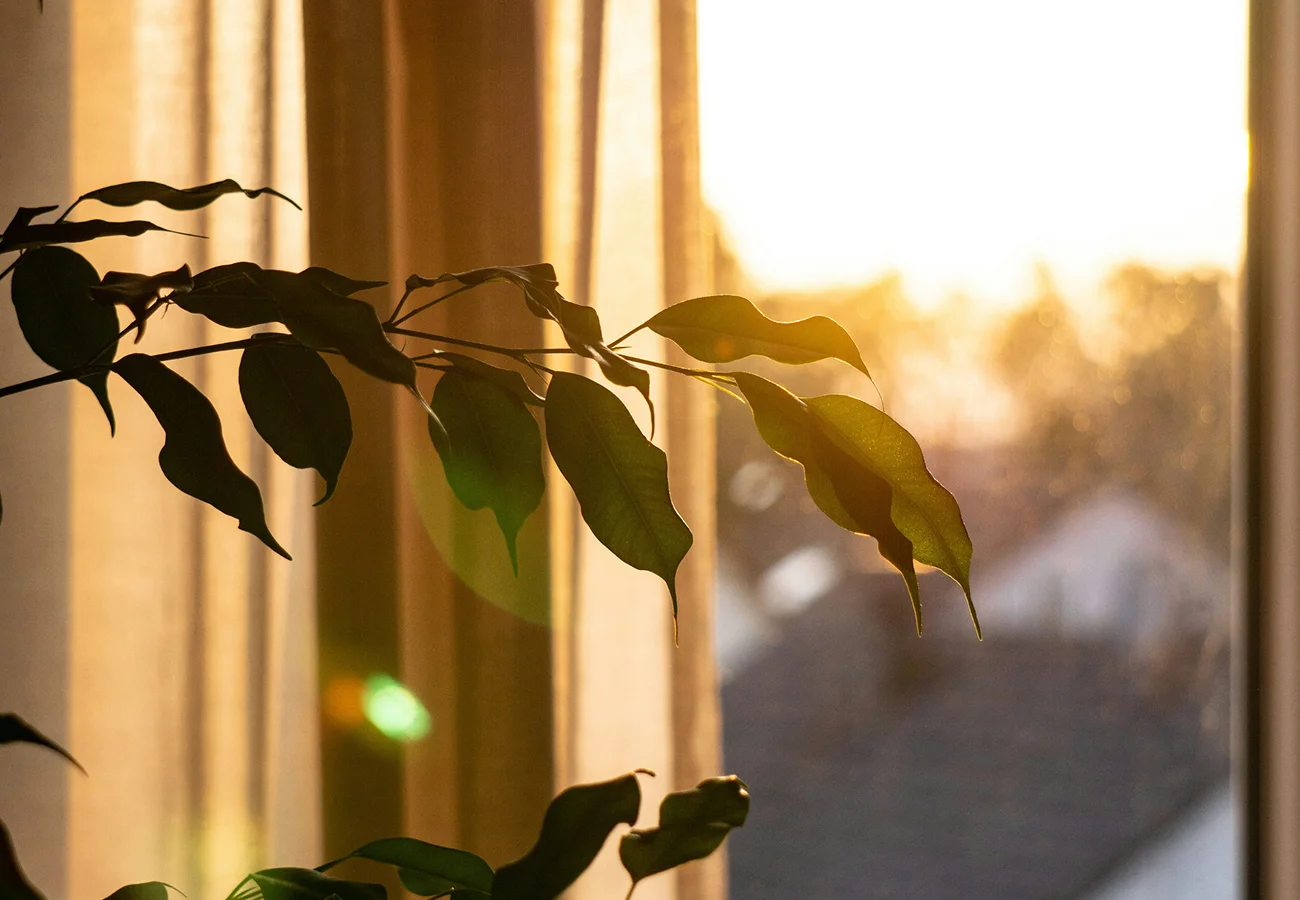
Indirect light is the brightness a plant receives without the sun's rays touching its leaves directly. In many cases, you can identify it as that well-lit space near a window where, if you hold out your hand, you don't feel heat on your skin and you don't see a shadow with sharp edges. It's the ideal lighting for most indoor plants, as it allows them to grow without getting burned.
Hearing that a plant needs "bright indirect light" is one of the most confusing things when you're just starting out. Many times we buy a plant and are afraid to put it near the window in case it burns, or we leave it in a dark corner thinking it's protected. The first thing we want to tell you is that it's normal not to know where to put it; understanding how light moves through your own home is the first step to understanding your plants better.
How to differentiate types of light
Not all brightness is the same. To make it easier, we can divide the light in our home into three levels that almost always look like this:
- Direct light: The sun's rays hit the plant directly. If you stood there, you'd feel heat on your face. Only some plants (like cacti or succulents) can handle this during the strongest hours of the day.
- Bright indirect light: It's like being under the shade of a tree on a clear day. There's plenty of brightness, you can read a book without turning on a lamp, but the sun doesn't touch the plant. This is the "sweet spot" for most tropical plants.
- Low light or shade: This is the space far from windows or in dark hallways. Few plants grow well here; many times they just survive, but stop putting out new leaves.
Signs that the light isn't right
Your plant will let you know if it likes where you put it or not. You just need to observe these changes:
If it needs more light
- It stretches a lot: The stems become long and thin, reaching toward the nearest window (this is called etiolation).
- Small and pale leaves: New leaves are born smaller than normal or lose their intense green color.
- The soil doesn't dry: Without light, the plant doesn't use water quickly, which can cause the roots to rot.
If it has too much light (or direct sun)
- Brown or gray spots: Dry areas appear in the middle of the leaf, as if it were a burn.
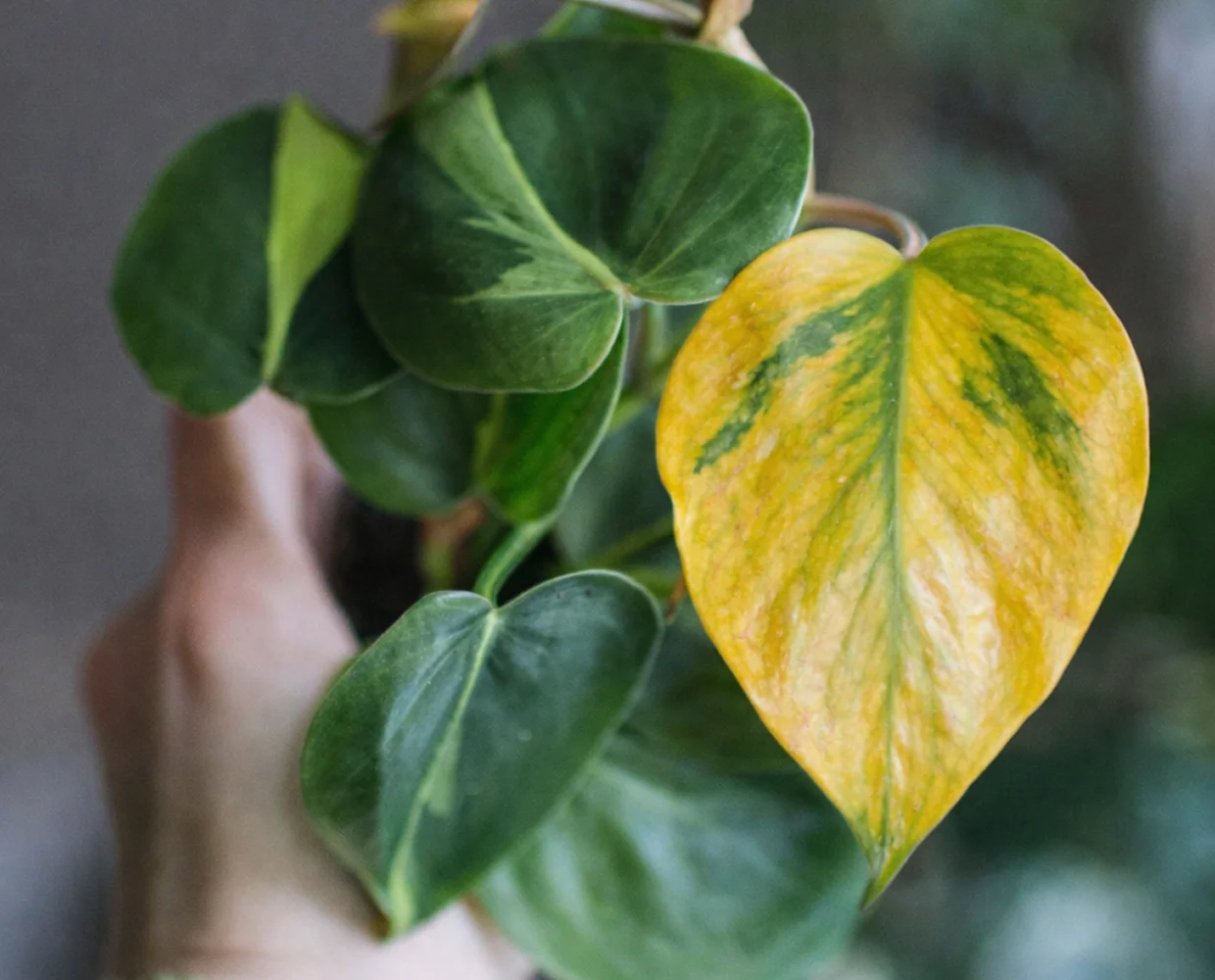
- Yellow or "washed out" leaves: The color looks dull, as if the sun had faded the green.
- It wilts quickly: Even with water, the plant looks droopy during the hottest hours.
Practical guide to positioning your plants
The orientation of our windows greatly changes the intensity of light. Here are some step-by-step tips:
- Observe your windows: In the southern hemisphere, south-facing windows tend to receive the most intense light almost all day. North-facing ones are cooler and have softer light. In the northern hemisphere, it's the opposite.
- Use thin curtains: If the sun comes in very strong through a window, a white or translucent curtain is the best tool. This transforms direct light into that "indirect light" we're looking for.
- The two-meter rule: Many times, moving the plant a couple of meters away from a very sunny window is enough to protect it from direct rays without losing brightness.
- Rotate your pot: Light almost always comes from one side. Rotate your plant a quarter turn every week so it grows straight and doesn't lean entirely toward the glass.
Frequently asked questions (FAQ)
Does a regular light bulb work for my plants?
Most of the time, regular household bulbs don't have enough power for a plant to grow healthy. They help a little, but they don't replace the natural brightness that comes through a window.
Can I put my plant in the bathroom if it has a small window?
Bathrooms tend to be very humid but very dark. If the window is small or the glass is very opaque, it's likely that only very resistant plants (like Sansevieria) will feel comfortable there.
What if my apartment is very dark?
In these cases, it's best to choose shade plants or use special grow lights. It also helps to keep the glass very clean; dust blocks more light than it seems.
Is morning sun the same as afternoon sun?
No. Morning sun (before 11:00 AM) tends to be gentler. Many plants that ask for indirect light can receive a bit of direct early sun without suffering damage. Afternoon sun is what usually causes burns.
Understanding the light in your home takes a few days of observation, but once you find the ideal spot, you'll see how your plant changes completely. It's a process of trial and error where the most important thing is to be present. If you want to learn to identify the best corners of your home and understand which spot each of your plants prefers, tools like Helia help you observe and decide with more calm and confidence.